


Viburnum Tinus ‘Anvi’ Spirit™ (Spirit Laurustinus)
Viburnum Tinus ‘Anvi’ Spirit™ (Spirit Laurustinus)
Couldn't load pickup availability
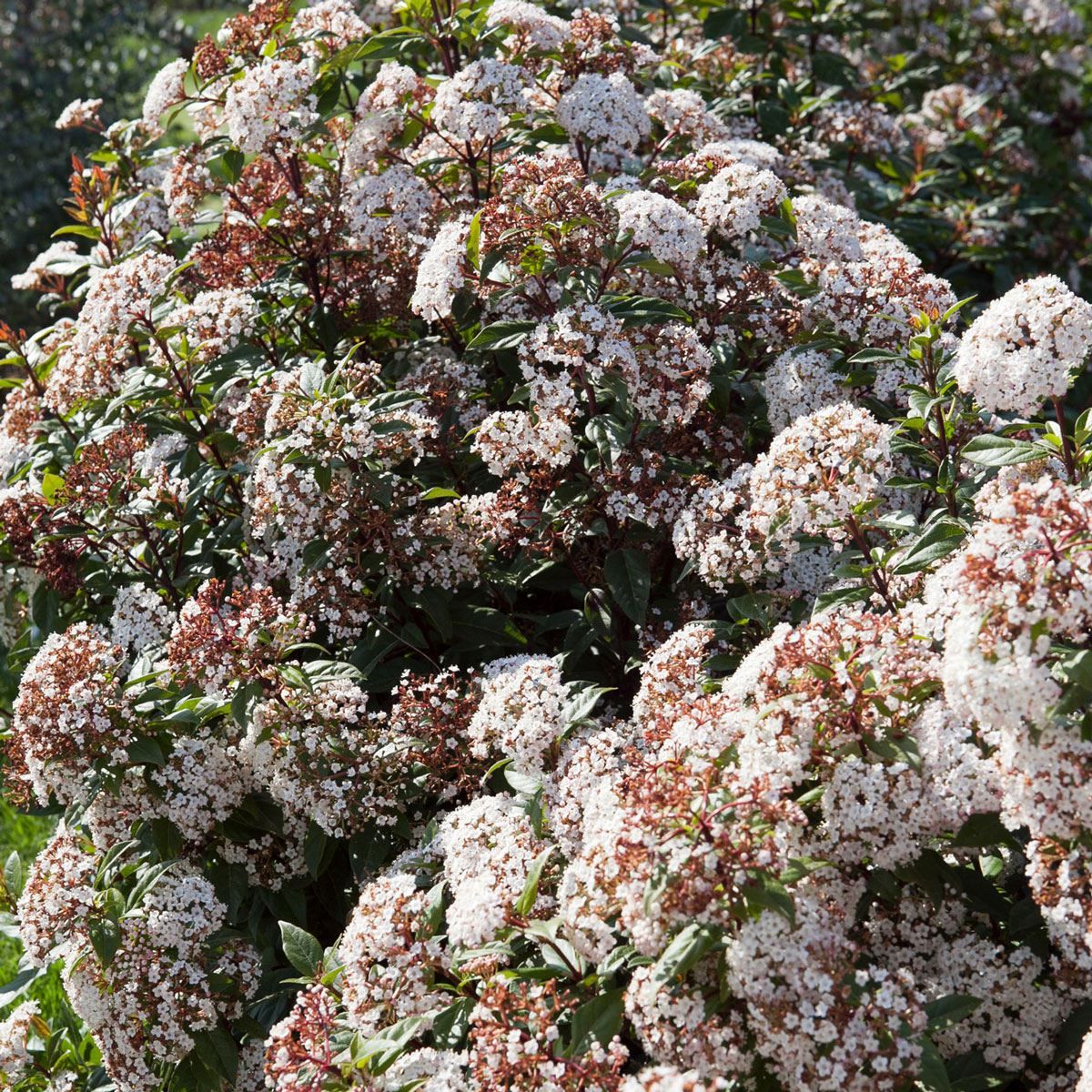
Viburnum Tinus ‘Anvi’ Spirit™ is a dense, rounded evergreen shrub with glossy forest-green foliage and attractive crimson-toned new stems. Large clusters of pink buds open into lightly fragrant creamy-white flowers, creating an impressive display from winter through late spring. Deep purplish-blue berries follow the flowers, extending its ornamental appeal into the following season.
Ideal for hedging, screening, mixed garden beds or feature planting, Spirit Laurustinus provides reliable year-round structure and excellent seasonal colour. Its dense growth responds well to pruning and performs in full sun or partial shade, making it a practical choice for customers seeking an attractive, hardy and relatively low-maintenance privacy plant.


Collapsible content
Mature height
Approximately 3–4 m when left unpruned; it can be maintained at a smaller height through regular trimming.
Mature width
Approximately 3–3.5 m when allowed to develop naturally.
Spacing
Plant approximately 1–1.5 m apart for a dense hedge or screen. Allow 2.5–3.5 m between plants when growing them as individual specimens. This spacing is based on the cultivar’s mature spread and intended hedging use.
Evergreen/Deciduous
Evergreen
Foliage
Glossy dark-green foliage, crimson-toned young stems, pink flower buds, creamy-white flowers and deep purplish-blue berries.
Flowering Period & Fruit Development/Harvest
Large flower clusters appear from winter through late spring, followed by decorative blue to purplish-blue berries.
Sun tolerance
Full sun to part shade
Maintenance
Low to moderate maintenance. Grow in fertile, moisture-retentive but well-drained soil and water regularly during establishment. Prune to the required size after the berries have finished to maintain dense, tidy growth.
Root System
Woody, branching and moderately spreading. Provide adequate soil space around established plants and avoid prolonged waterlogging, as the cultivar performs best in moist but well-drained soil.