


Corymbia gummifera (Red Bloodwood)
Corymbia gummifera (Red Bloodwood)
Couldn't load pickup availability
Corymbia gummifera, commonly known as the Red Bloodwood, is a very common Australian native tree reaching up to 30 m in height and forming a lignotuber. It can also exist as a mallee or smaller tree on ridgetops. This iconic species is widespread along the New South Wales coast into Queensland as far north as Bundaberg, with smaller populations in eastern Victoria around Mallacoota and East Gippsland.
It thrives in bushland on sandstone and sandy soils, forming a co-dominant part of coastal dry sclerophyll forests and woodlands. The bark is continuous, flaky or tessellated, brown in color, often marked with black burnt-looking patches and gum excretions. Juvenile leaves are lanceolate to broad-lanceolate, mid-green, up to 17 cm long and 5 cm wide. Adult leaves are alternate, spear-shaped (lanceolate), mid-green, up to 16 cm long and 4 cm wide, with a noticeable discoloration between upper and lower surfaces.
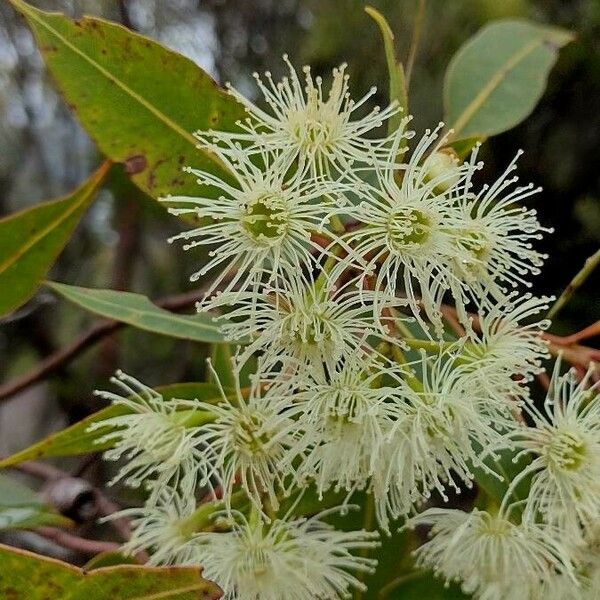
Corymbia gummifera produces terminal clusters of creamy-white flowers in late spring to summer (November–January). Each flower is approximately 3 cm in diameter, with prominent stamens and a distinctive hemispherical to conical calyptra. Following flowering, the tree forms urn-shaped capsules, or gumnuts, up to 20 mm long and 15 mm wide, with deeply depressed discs and enclosed valves, making the species easily identifiable.


Collapsible content
Mature height
30 m
Mature width
8–15 m
Spacing
5–8 m
Evergreen/Deciduous
Evergreen
Foliage
Foliage: Mid-green | Flowers: Creamy-white | Bark: Brown with black patches
Flowering Period & Fruit Development/Harvest
November–January
Sun tolerance
Full sun
Maintenance
Low; prune only if required for clearance or shaping
Root System
Fibrous, suited to well-drained soilsLignotuber present; suited to sandy and well-drained soils