


Hemerocallis ‘Saucy Rogue’ (Saucy Rogue Daylily)
Hemerocallis ‘Saucy Rogue’ (Saucy Rogue Daylily)
Couldn't load pickup availability
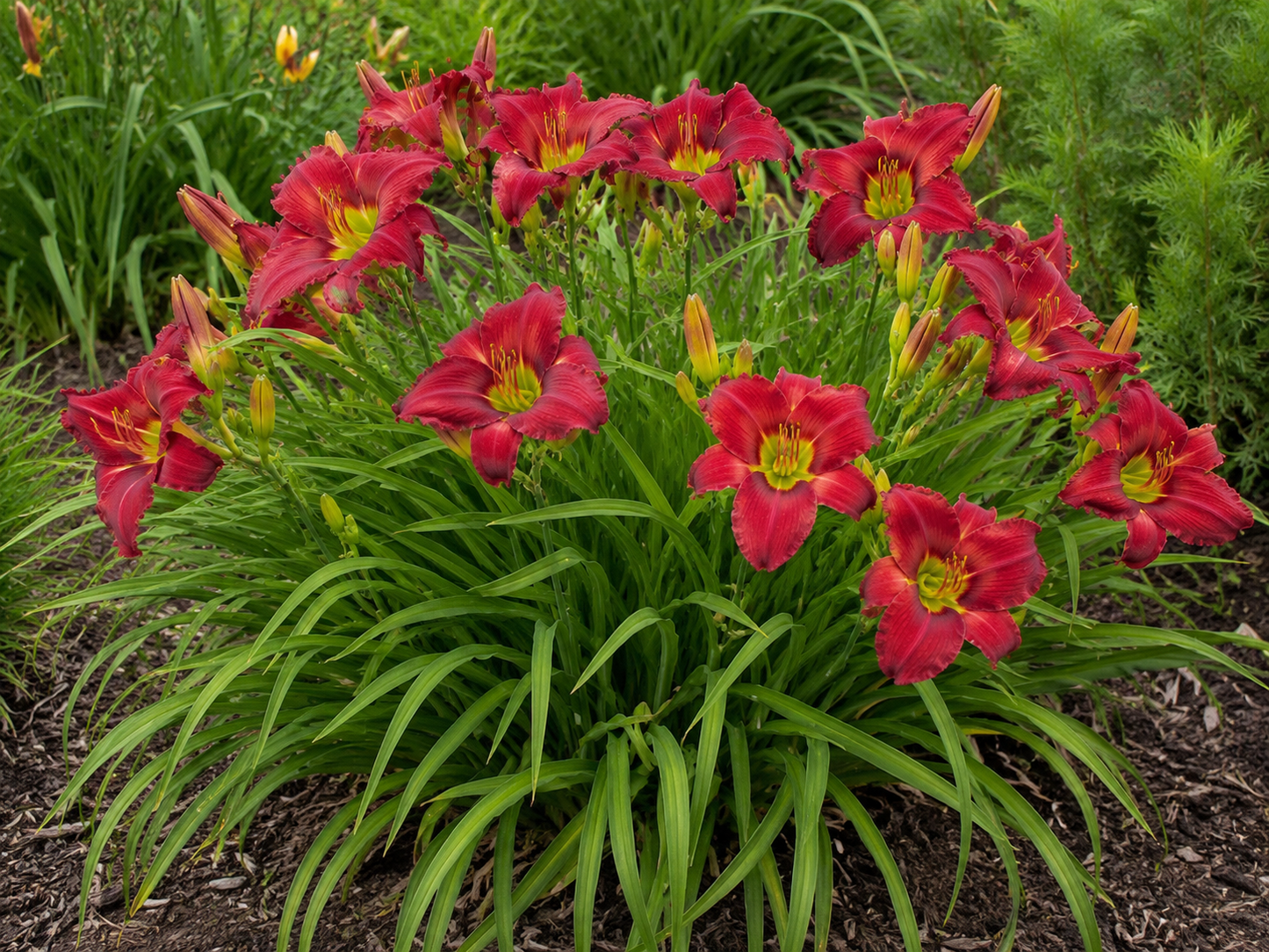
Hemerocallis ‘Saucy Rogue’ (Saucy Rogue Daylily) is a compact, repeat-flowering perennial featuring rich red blooms with a contrasting green throat. The miniature flowers rise above neat clumps of arching, grass-like green foliage, creating a bold display without taking up excessive garden space. Registered in 1984, this cultivar produces flower stems approximately 40 cm tall and blooms during the middle of the daylily season.
Ideal for borders, mass plantings, cottage gardens, rock gardens and containers, ‘Saucy Rogue’ provides dependable seasonal colour with minimal care. Each individual flower lasts for around one day, but numerous buds open successively to extend the overall display. Its compact habit, heat tolerance and ability to rebloom make it an excellent option for customers wanting a colourful, hardy and easy-to-maintain garden perennial.

Collapsible content
Mature height
Approximately 40 cm, including flower stems
Mature width
Approximately 30 cm
Spacing
Plant approximately 30–45 cm apart
Evergreen/Deciduous
Deciduous to semi-evergreen, depending on climate
Foliage
Rich red flowers with a green throat and medium-green foliage
Flowering Period & Fruit Development/Harvest
Midseason, typically during summer, with repeat flowering possible later in the season
Sun tolerance
Full sun to part shade; flowering is strongest with at least six hours of sunlight
Maintenance
Low maintenance. Plant in fertile, moist but well-drained soil. Water regularly while establishing and during prolonged dry periods. Remove spent flower stems and old foliage to maintain a tidy appearance. Established clumps may be divided every few years.
Root System
Dense, clumping root system consisting of fleshy or tuberous storage roots with finer fibrous roots. It is generally non-invasive and can be divided when the clump becomes crowded