


Pinus Wallichiana ‘Moidart’ (Moidart Himalayan Pine)
Pinus Wallichiana ‘Moidart’ (Moidart Himalayan Pine)
Couldn't load pickup availability
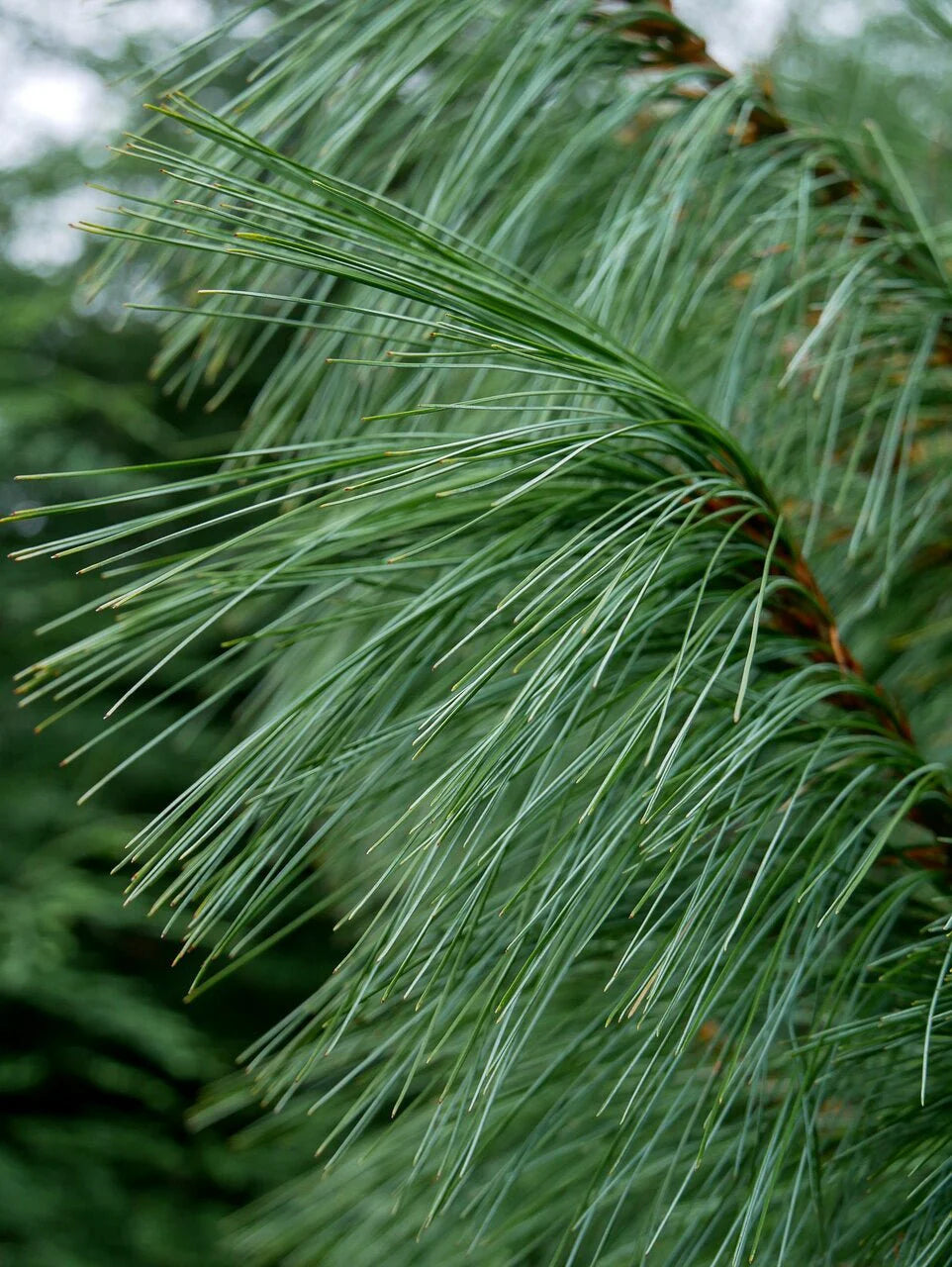
Pinus Wallichiana ‘Moidart’, commonly known as Moidart Himalayan Pine, is an elegant evergreen conifer valued for its compact, upright form and soft, cascading foliage. Its long, slender needles have an attractive silvery blue-green colour and create a graceful, feathery texture throughout the year. Unlike the much larger species, ‘Moidart’ develops into a more manageable specimen suited to residential gardens and feature plantings.
This distinctive cultivar is ideal for adding year-round structure to mixed borders, rock gardens, courtyards and smaller landscapes. Its refined foliage provides excellent contrast against broad-leaved shrubs and flowering plants, while its naturally architectural shape requires minimal pruning. Customers will appreciate its unusual appearance, compact size and dependable evergreen colour.


Collapsible content
Mature height
Approximately 2–4m.
Mature width
Approximately 1.5–3m, forming a compact, upright to broadly conical specimen.
Spacing
Allow approximately 2–3m between plants so each specimen can develop its natural shape.
Evergreen/Deciduous
Evergreen.
Foliage
Soft silvery green to blue-green needles; young cones are green, maturing to light brown; bark becomes grey-brown with age. The species produces long, slender needles in bundles of five and pendulous cylindrical cones.
Flowering Period & Fruit Development/Harvest
A non-flowering conifer. Male and female reproductive cones generally develop during spring, with seed cones maturing later rather than producing conventional flowers.
Sun tolerance
Full sun. Grow in moist, fertile but well-drained soil. Avoid persistently waterlogged ground and very exposed sites where the soft foliage may be damaged.
Maintenance
Low. Water regularly during establishment and through extended dry periods. Apply mulch around the root zone to retain moisture, keeping it clear of the trunk. Little pruning is required apart from removing damaged, dead or poorly positioned branches.
Root System
A woody, spreading root system with strong lateral roots. It is not generally considered aggressively invasive, but adequate soil space and good drainage should be provided for healthy long-term development.