


Syzygium Australe ‘Big Red’ (Big Red Lilly Pilly)
Syzygium Australe ‘Big Red’ (Big Red Lilly Pilly)
Couldn't load pickup availability
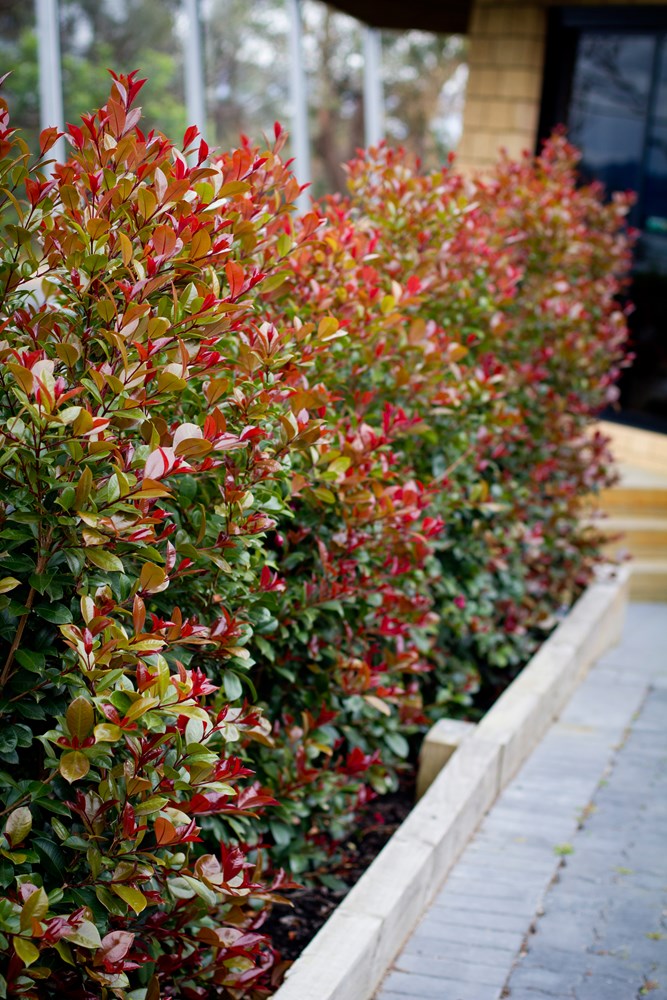
Syzygium Australe ‘Big Red’ is a fast-growing Australian native evergreen shrub prized for its bold foliage colour and dense, upright growth. New leaves emerge in rich crimson to burgundy-red shades before maturing to glossy dark green, creating vibrant seasonal contrast. Fluffy white flowers appear during summer, adding another layer of ornamental interest to this attractive screening plant.
Ideal for privacy screens, formal hedges, topiary and feature planting, Big Red Lilly Pilly responds exceptionally well to regular trimming and can be maintained at a practical garden size. Its vigorous growth and full foliage make it an excellent choice for customers wanting a colourful, reliable hedge that provides year-round structure and coverage.


Collapsible content
Mature height
Approximately 4 m; it can be maintained at around 2–3 m through regular pruning.
Mature width
Approximately 2–2.5 m when allowed to grow naturally.
Spacing
Plant approximately 1 m apart for hedging and screening. Allow up to 1.5 m apart for a looser screen or individual specimens.
Evergreen/Deciduous
Evergreen
Foliage
Deep crimson, burgundy-red or bronze new growth; glossy dark-green mature foliage; fluffy white flowers.
Flowering Period & Fruit Development/Harvest
White flowers appear mainly during summer, sometimes followed by fleshy berries that attract birds.
Sun tolerance
Full sun to part shade. Bright light encourages strong, colourful new foliage.
Maintenance
Low to moderate maintenance. Water regularly during establishment and during extended hot or dry periods. Grow in fertile, well-drained soil and prune during early spring or after a growth flush to maintain a dense hedge and encourage colourful new growth.
Root System
Fibrous and moderately spreading. Like most lilly pillies, its roots are generally not considered highly invasive, although adequate distance from structures and underground services is still recommended.