


Ulmus Minor ‘Variegata’ (Variegated Silver Elm)
Ulmus Minor ‘Variegata’ (Variegated Silver Elm)
Couldn't load pickup availability
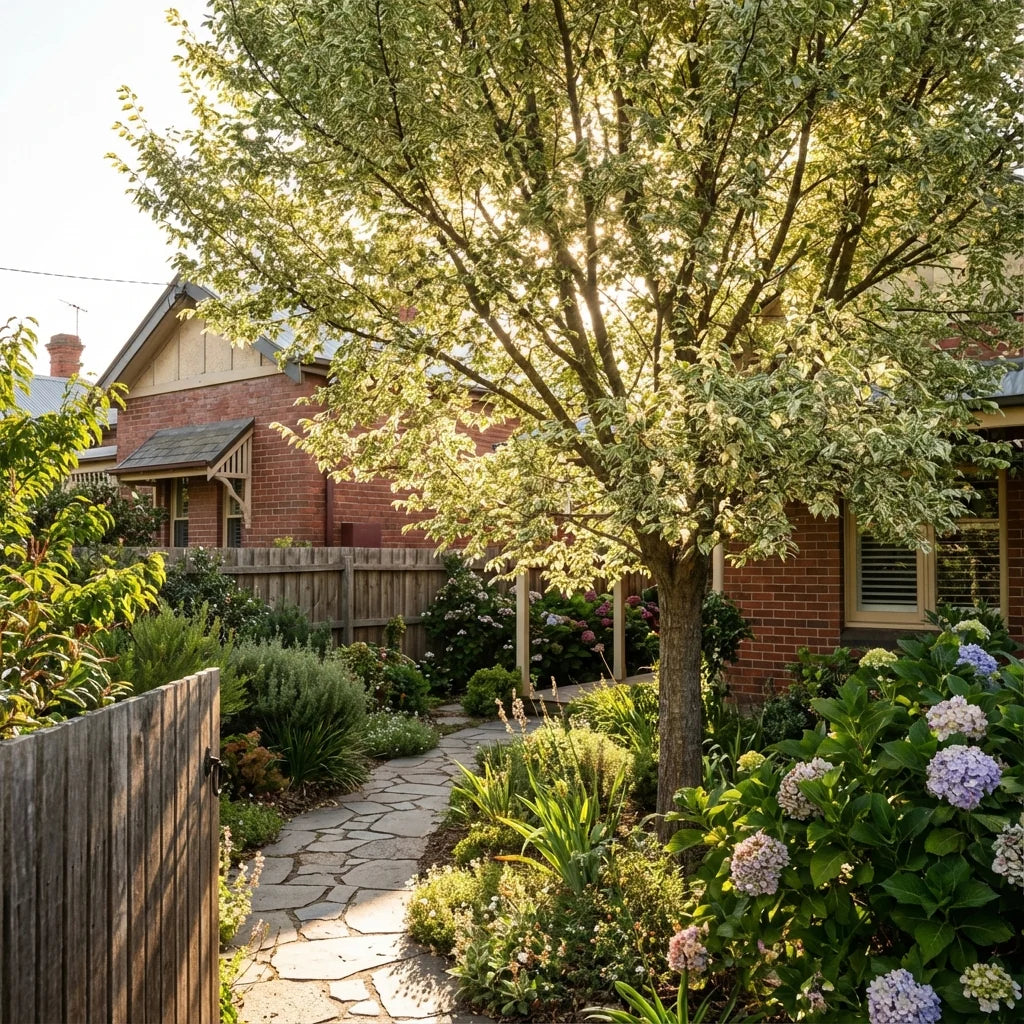
Ulmus Minor ‘Variegata’, commonly known as Variegated Silver Elm, is an impressive deciduous shade tree distinguished by its luminous patterned foliage. Its serrated green leaves are irregularly mottled and splashed with creamy white, producing an attractive silver appearance across the canopy. The tree develops a broad, open to vase-shaped crown, providing generous summer shade and strong architectural presence in the landscape.
Ideal for parks, avenues, large gardens and spacious rural properties, Variegated Silver Elm creates an exceptional feature when contrasted with darker-leaved plants. Its vigorous growth, substantial canopy and unusual colouring offer excellent long-term landscape value. Customers will appreciate its distinctive foliage, dependable shade and ability to become a magnificent statement tree where sufficient growing space is available.


Collapsible content
Mature height
Approximately 15–20 metres.
Mature width
Approximately 10–13 metres, forming a broad, open or domed canopy.
Spacing
Allow approximately 10–13 metres between trees, buildings and major structures to accommodate the mature canopy and extensive root system.
Evergreen/Deciduous
Deciduous.
Foliage
Green foliage heavily mottled, streaked and splashed with creamy white, creating an overall silver appearance; small reddish-green flowers; pale green samaras; yellow to yellow-brown autumn foliage.Green foliage heavily mottled, streaked and splashed with creamy white, creating an overall silver appearance; small reddish-green flowers; pale green samaras; yellow to yellow-brown autumn foliage.
Flowering Period & Fruit Development/Harvest
Small, inconspicuous flowers appear from late winter into early spring, generally before the leaves emerge. Flat, papery samaras develop during spring and mature shortly afterwards.
Sun tolerance
Full sun to partial shade. It adapts to various soil types but performs best in fertile, moisture-retentive soil with reliable drainage.
Maintenance
Low to moderate. Water regularly during establishment, mulch the root zone and undertake formative pruning while young to develop a sound branch structure. Remove dead, damaged or crossing branches when necessary and monitor for elm pests and diseases, as Ulmus minor can be susceptible to Dutch elm disease.
Root System
Extensive, vigorous and broadly spreading, with the potential to produce suckers. Provide generous root space and avoid planting close to buildings, drains, paving or confined garden beds