


Ulmus parvifolia ‘Murray’s Form’ (Murray’s Chinese Elm)
Ulmus parvifolia ‘Murray’s Form’ (Murray’s Chinese Elm)
Couldn't load pickup availability
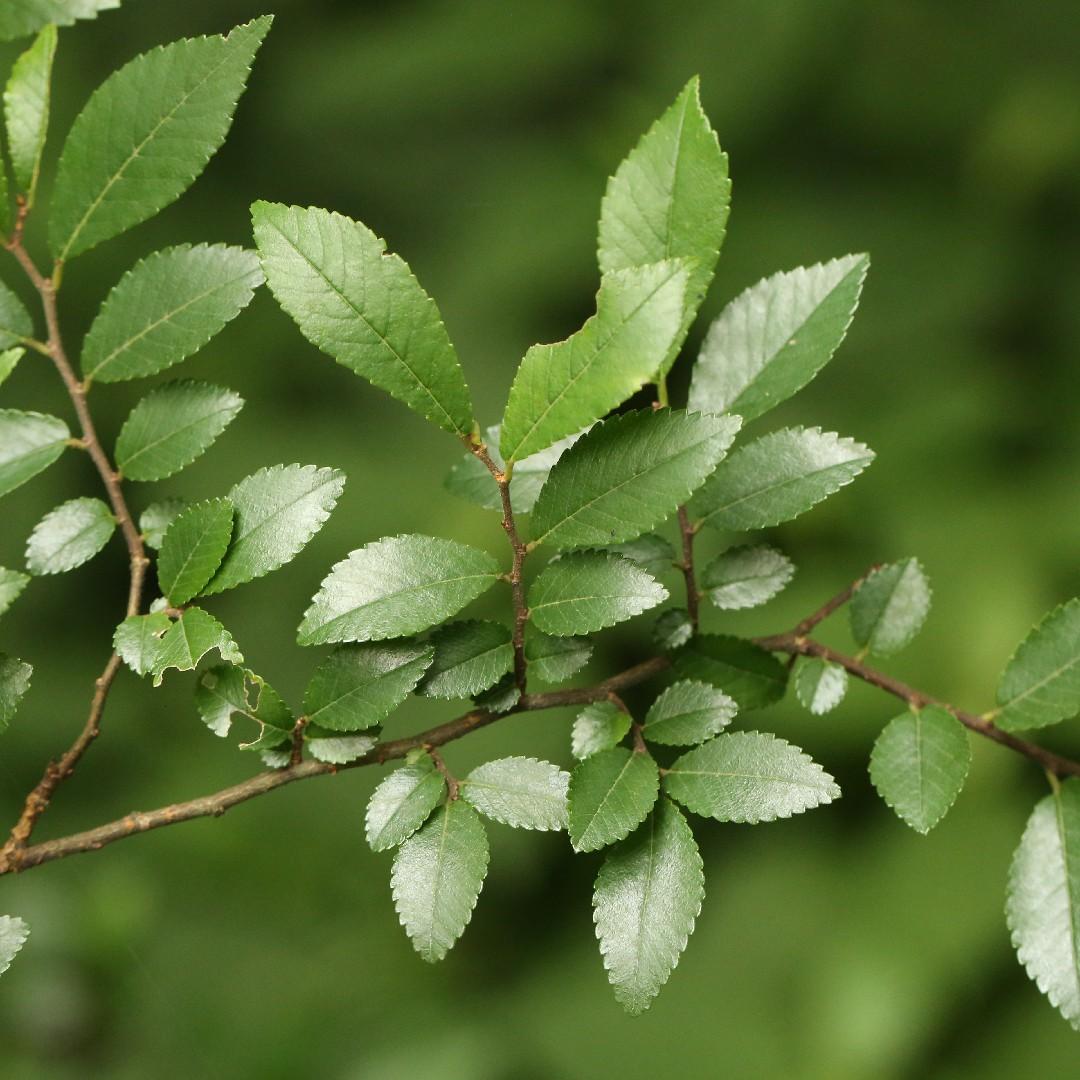
Ulmus parvifolia ‘Murray’s Form’ is a graceful, medium-sized shade tree with vigorous upright growth that develops horizontally ascending branches and an open, rounded canopy. Its small, glossy dark-green leaves have finely serrated edges and transition through attractive bronze and golden-yellow tones before falling. As the tree matures, its exfoliating bark reveals a decorative mosaic of grey, green, orange and brown, providing valuable winter interest.
Perfect for larger gardens, parks, avenues, windbreaks and wide streetscapes, ‘Murray’s Form’ creates generous seasonal shade without producing an overly dense canopy. It performs best in a sunny position with well-drained soil but tolerates compacted ground, coastal exposure, dry periods and short periods of wetness once established. Customers should choose this dependable cultivar for its strong growth, cooling shade, attractive autumn foliage and distinctive ornamental bark.


Collapsible content
Mature height
Approximately 10 metres, potentially reaching 10–13 metres under favourable conditions.
Mature width
Approximately 8 metres.
Spacing
Approximately 6–8 metres apart, depending on the desired canopy coverage and landscape application.
Evergreen/Deciduous
Semi-deciduous to deciduous depending on climate. Foliage may remain on the branches until late winter in warmer areas.
Foliage
Glossy dark-green foliage with bronze and golden-yellow autumn tones. Mature bark displays mottled grey, green, orange and brown.
Flowering Period & Fruit Development/Harvest
Produces small, inconspicuous flowers from late summer through autumn, followed by small papery seed structures.
Sun tolerance
Full sun to partial shade, with the strongest canopy development and autumn colour achieved in full sun.
Maintenance
Low to moderate. Water deeply during establishment, mulch around the root zone and undertake formative pruning while young to develop a strong central leader. Remove dead, damaged or crossing branches as required.
Root System
Strong, fibrous and spreading. Generally not prone to suckering, although root disturbance should be minimised. Allow suitable clearance from paving, drains and underground services.